
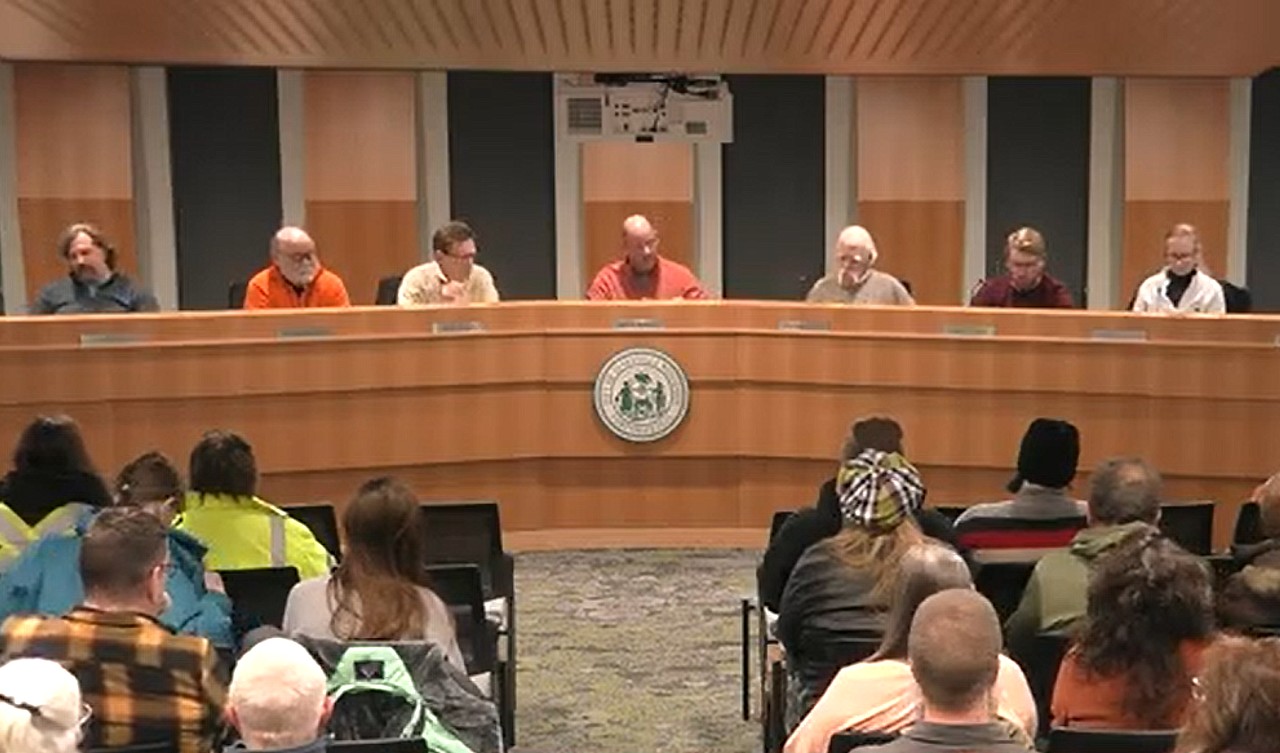
JANESVILLE — Despite support from petition supporters and at least two council members, the Janesville City Council on Monday declined to fast-track a direct-legislation ordinance that could eventually force a referendum on data centers.
The group No Janesville Data Center is behind the direct-legislation petition that would require the city council to create an ordinance requiring that all large proposed development projects of $450 million or more for the GM/JATCO site be put before electors in a referendum.
Council member Heather Miller moved to suspend the rules requiring a second reading and public hearing, which could have put the measure on the ballot for the April referendum, but that vote lost 5-2.
She then moved to approve the measure immediately, allowing a referendum in April, but that vote lost 5-3, with Miller, Councilmember Josh Erdman and Councilmember Michael Cass the only three voting in favor.
Council President Aaron Burdick argued that a measure of this importance should have a public hearing to allow everyone in the community the opportunity to have their say.
The measure now will have a second reading at the Feb. 9, but according to state statute, a vote on the direct-legislation wouldn’t come until November.
Only if the direct-legislation were to be approved in November would residents have a chance to finally vote up or down on a data center in the spring of 2027.
The petition was certified on Jan. 21, opening the door for action at Monday’s council meeting.
According to the Wisconsin League of Municipalities, direct legislation is a process that allows citizens in cities and villages to submit a proposed ordinance or resolution to the community’s governing body for adoption or referral to a vote of the electors as provided for in Wisconsin Statute § 9.20.
A petition for direct legislation must be signed by “[a] number of electors equal to at least 15 percent of the votes cast for governor at the last general election in their city or village.” Wis. Stat. § 9.20(1). Within 15 days of the petition being filed, the clerk must determine whether the petition and proposed legislation are sufficient.